
Survey Decatur City Directory Holdings
The main Decatur historical-directory shelf is at the DeKalb History Center in the Old Courthouse. Its finding aid warns that most periodical sets are incomplete, and gaps are not always marked. Request an archives appointment and identify the exact book in advance. Before 1956, Atlanta city and suburban listings were bound together. After the book split, a researcher seeking Decatur normally needs the suburban edition, when that edition survives.
| Collection | Verified years | Where held | Access |
|---|---|---|---|
| Atlanta combined city and suburban volumes | Selected volumes from 1887 through 1953 | DeKalb History Center | Archives appointment; enumerated years only |
| Atlanta city/suburban after split | Selected city, suburban, or both editions, 1956 through 1991 | DeKalb History Center | Confirm the suburban book for the target year |
| Decatur/Avondale Estates directory | 1928-29 | DeKalb History Center | Request by title before visiting |
| DeKalb directory | 1939 only | DeKalb History Center | Archives appointment |
| Digitized Atlanta volumes | 1859/60 through 1922 | Emory digitization via Internet Archive | Free online |
| Genealogy and newspaper resources | Collection-dependent | Decatur Library | Second floor, microfilm, databases, staff help |
These are not continuous runs. The exact History Center directory list appears on its special reference and periodicals page.
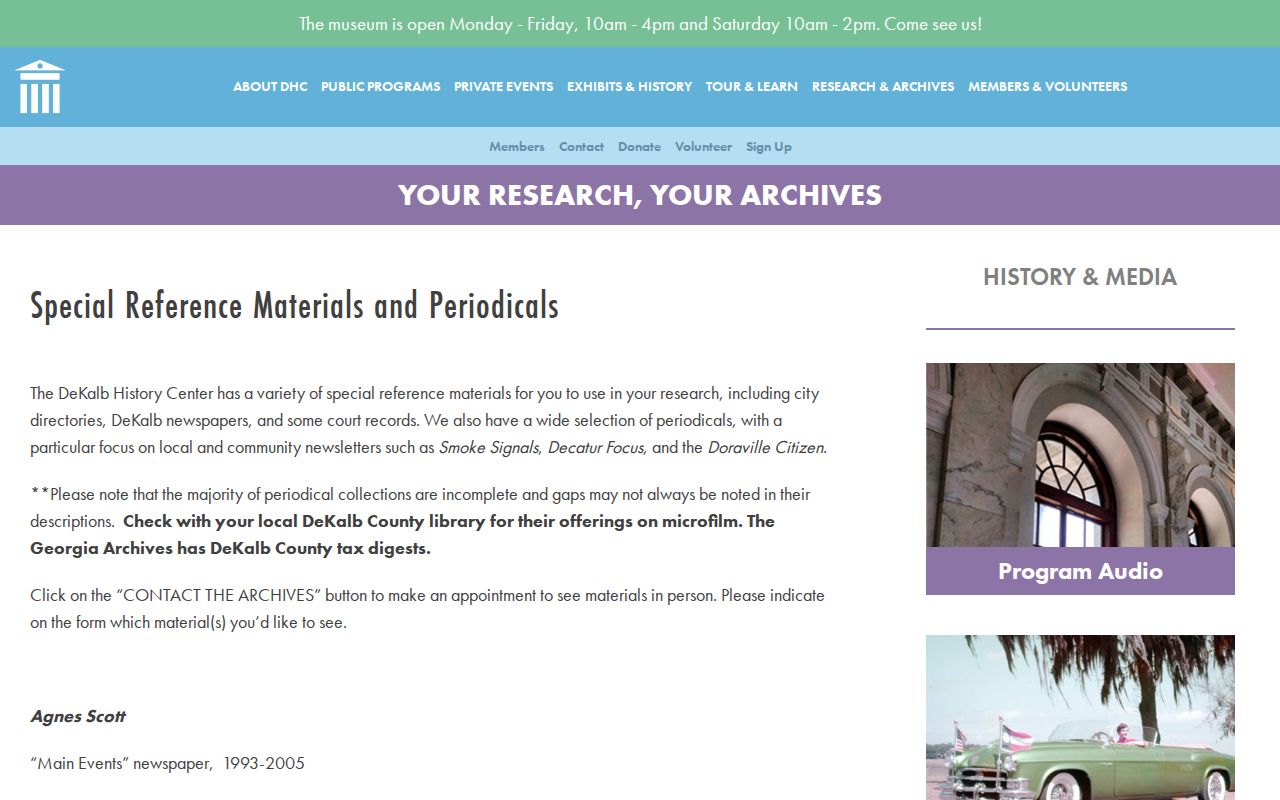
The holdings page is the best check against assuming that every year, or every suburban edition, is on the shelf.
Decatur City Directories With Local Scope
Two books stand out because they are not just points in the Atlanta run. The History Center lists a 1928-29 Decatur and Avondale Estates directory. Its geographic reach also includes Emory and Scottdale, so the title page and locality labels must stay with any citation. The official holdings pages do not identify its publisher. Do not call it a Polk directory without checking the book itself.
The 1939 DeKalb directory is even more unusual. The History Center says it was the only one published. That makes it a one-year county snapshot, not the start of a series. It can be compared with Atlanta volumes held for 1938 and 1940 and with the retained Decatur City Court material from 1939. A name present in one source but absent in another may reflect scope, selection, or a real change.
Note: Ask the archives for both the precise title and call location, since the 1928-29 local book is absent from the later directory PDF finding aid.
Use Decatur Library Directory Resources
Decatur Library, at 215 Sycamore Street, keeps its genealogy collection on the second floor. Published hours are Monday through Wednesday from 9 a.m. to 8 p.m. and Thursday through Saturday from 9 a.m. to 6 p.m.; Sunday is closed. The branch offers a Local History Collection, microfilm and microfiche, GALILEO computers, a catalog, and reference help. Call 404-370-3070 before a long trip when a particular reel or volume matters.
The library's genealogy guide names Atlanta historical-directory materials, Georgia state census and vital registers, DeKalb News Era, Atlanta Constitution, and Atlanta Journal microfilm. HeritageHub adds authenticated obituary and death-notice searching across a broad national database, though that scope does not guarantee every Decatur title or year.
The library research surface is shown in its official genealogy guide.
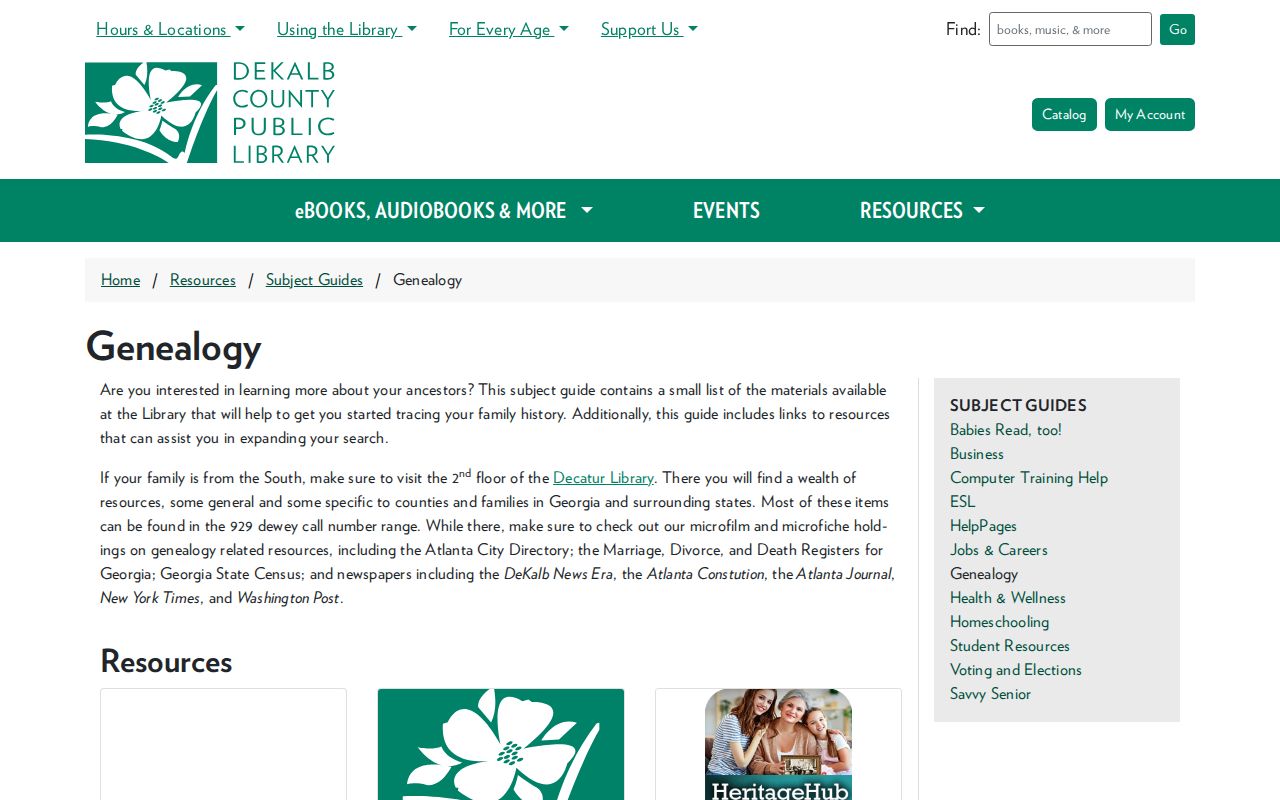
The screenshot points to the companion sources that can explain a missing directory appearance through a death notice, changed name, school item, or news report.
The Decatur Library branch page also documents the local-history services available on site.
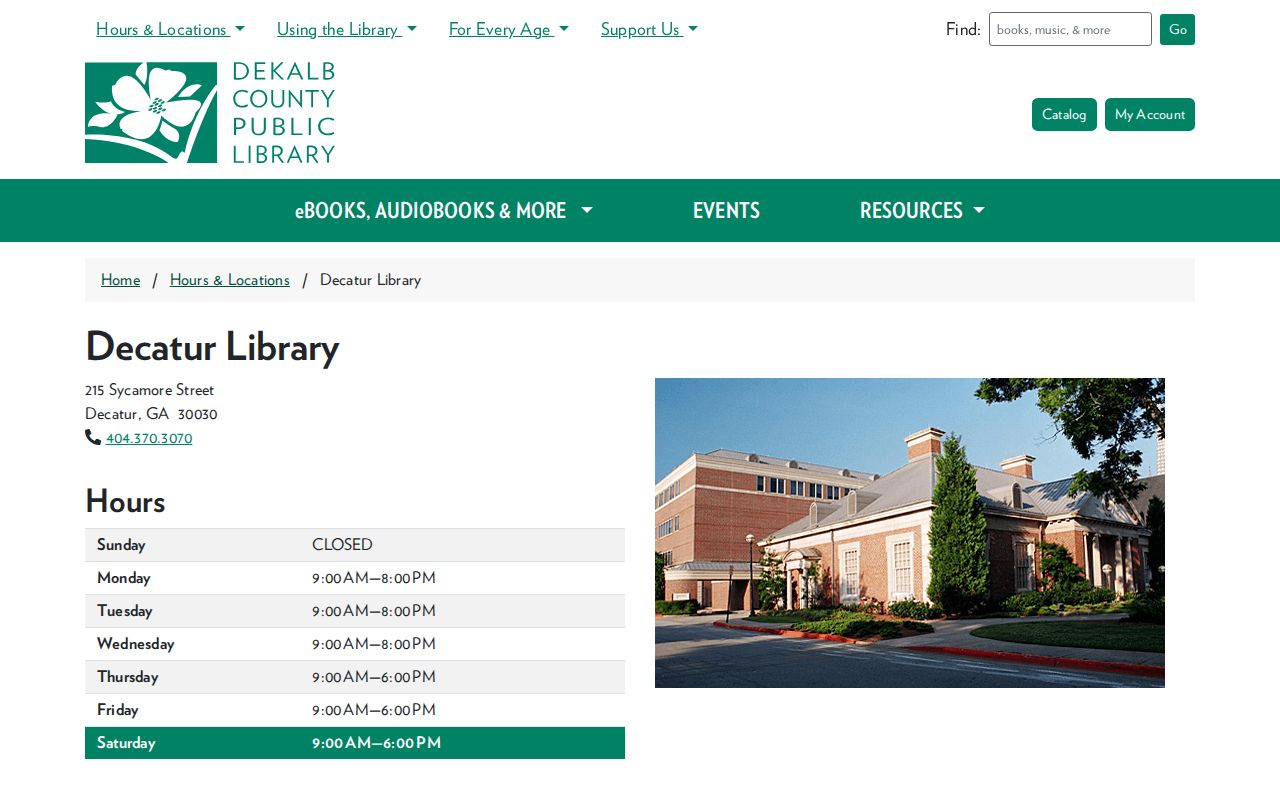
Use those service details to plan an in-person visit, especially when the needed directory or newspaper is not digitized.
Decode a Decatur City Directory Entry
A verified 1922 Atlanta volume entry reads: “Folger Harry L (Carrie F) agt Penn Mut Life Ins Co r Decatur Ga.” It names Harry L. Folger, places spouse Carrie F. in parentheses, abbreviates his work as agent, names his employer, and marks his residence as Decatur. It does not supply a Decatur street number. The dedicated 1928-29 local book may therefore be better for an address question.
| Name | Harry L. Folger, with initials preserved |
|---|---|
| Spouse | Carrie F., shown in parentheses |
| Occupation | agt, meaning agent |
| Employer | Penn Mutual Life Insurance Company |
| Residence | r Decatur Ga, a locality statement without street number |
| Limit | Search-visible OCR or transcription must be checked against the scanned page |
- Criss-cross directory
- A later directory or section arranged by street and house number. No Decatur-specific run was verified.
- Householder index
- An address-oriented list of household heads, which may omit other people at the home.
- Abbreviation key
- The book's own legend for codes such as
r,h,wid, and shortened occupations.
Photograph the title page and abbreviation key with the entry. In this run, wid D J means widow of D. J.; h precedes a home address, while clk, mech, and cond shorten clerk, mechanic, and conductor.
Search Decatur Directories Online
The digitized Atlanta directory run covers 1859/60 through 1922. Emory digitized the books, Internet Archive hosts them, and the Digital Library of Georgia collection record provides authoritative context. Search OCR first, but inspect the scanned image. Old type, initials, broken columns, and abbreviated localities can cause a correct entry to vanish from text search.
Online access does not replace the local shelf. The Decatur/Avondale book, 1939 DeKalb volume, later suburban books, and many periodicals still require an archive appointment or library work. Try surname variants and initials, browse the alphabetical page when OCR fails, and save the volume title, year, image number, and printed page.
The History Center special collections guide shows the wider archival context.
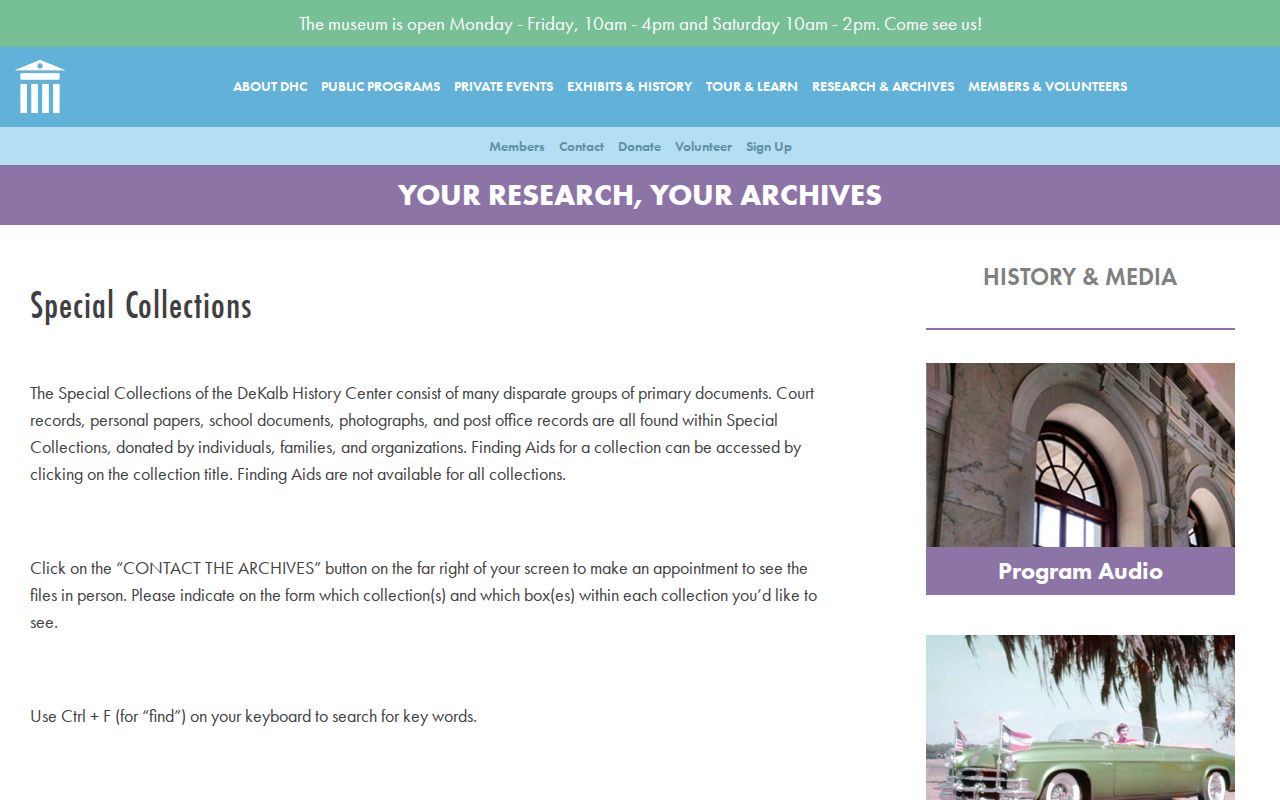
The collection guide helps move from a directory name to family papers, school items, municipal records, photographs, or organization files.
Follow Decatur Directory Milestones
The Decatur directory trail changes format several times. These dates explain why a household can move among online books, combined metropolitan volumes, suburban editions, and one-off local titles without moving at all.
| Year or period | Decatur directory milestone |
|---|---|
| 1859/60-1922 | Digitized Atlanta run available online, with Decatur references inside metropolitan volumes |
| 1887 | Earliest print volume listed in the History Center's 2020 inventory |
| 1928-29 | Standalone Decatur/Avondale Estates directory |
| 1939 | The only DeKalb directory reported by the History Center |
| 1956 | Atlanta city and suburban books separate as the combined volume becomes too large |
| About 1991 | Printed directory publication ceases |
Volume lists after 1956 include city, suburban, or both labels in different years. For Decatur, never assume the city edition contains the suburban address sought. Check the finding aid's label before scheduling the appointment.
Explain Gaps in Decatur Records
DeKalb County's 1842 courthouse fire created early record loss. The History Center identifies one official county volume as the only such volume to survive, while later deed material has turned up outside the courthouse. The fire predates the city directory runs here, but it matters when directory research leads to land, court, or family records from Decatur's first decades.
The Georgia Archives county microfilm cards help identify surviving county series and disaster notes. Describe loss at the record-series level shown by those cards. Do not claim that every early DeKalb record burned.
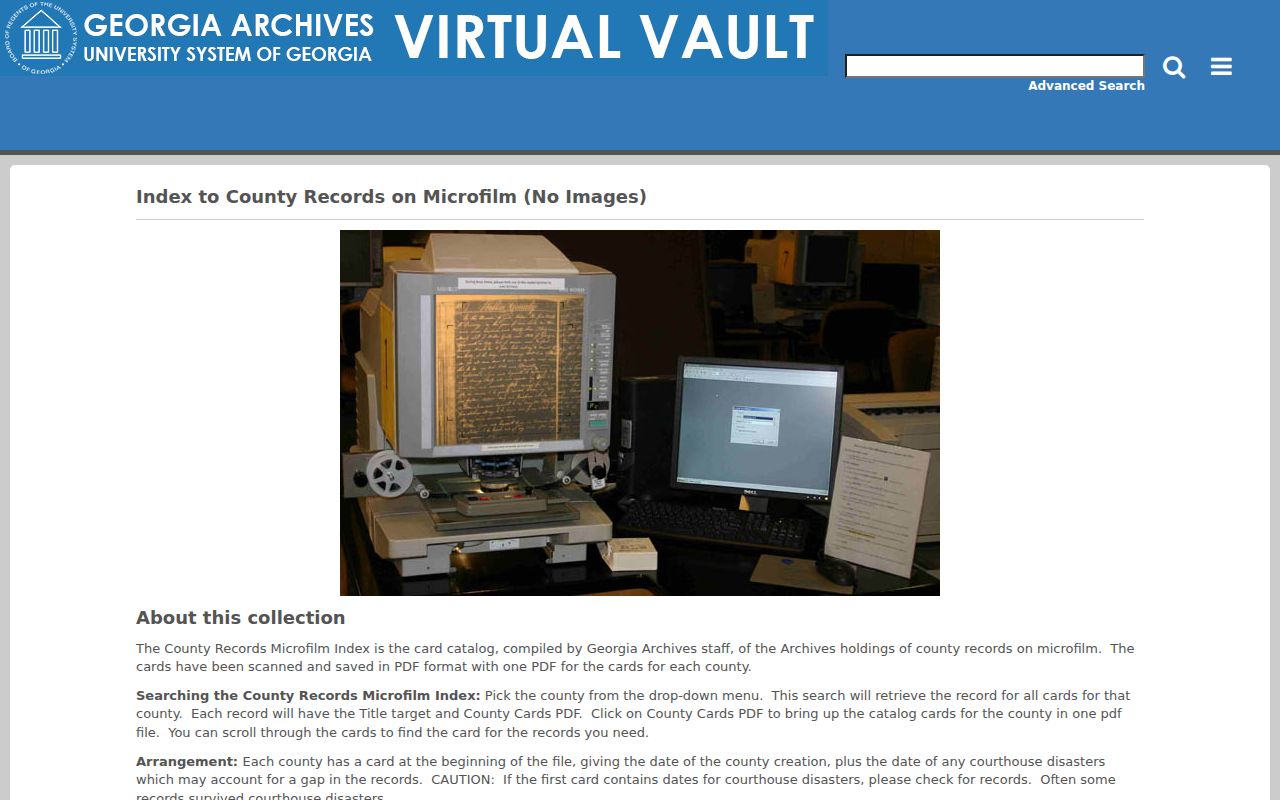
The card collection provides the needed fallback when a name disappears from local shelves and the question shifts to older government records.
Trace Families Through Decatur Directories
A printed directory fills years between federal censuses. It can show a move, spouse, widow status, occupation, employer, or a change in initials. The census supplies household members, ages, relationships, birthplaces, and status on one enumeration date. Used together, they reduce the risk of merging two people with the same name.
- Choose the combined, suburban, or local volume that actually covers Decatur in the target year.
- Find the surname and transcribe initials, spouse, widow mark, occupation, employer, address, and residence code exactly.
- Compare the nearest available directory years. Do not assume the collection has an annual run.
- Pair the entry with the nearest open census year: 1900, 1910, 1920, 1930, 1940, or 1950.
- Use DeKalb News Era, other newspaper runs, HeritageHub, deeds, probate, or school publications to explain a move or disappearance.
An absent name can mean a holding gap, split-volume mistake, OCR miss, death, move, name change, or non-listing. It is not proof by itself. If a present address is the real question, move to the Decatur street directory workflow, which owns the modern parcel and deed chain.
Extend Decatur Directory Research
Decatur's archival network reaches beyond printed directories. History Center holdings include Decatur Focus, Decatur Dispatch, DeKalb News periodicals, scattered school papers, oral histories, family collections, photographs, club records, and civic material. The Every Person By Name project recorded named community voices from 2023 through 2025 and now preserves the audio by archive appointment. It is a first-person memory collection, not a public household directory.
School and organization files can reconnect a name to a cohort or civic circle. Oakhurst Elementary material includes photographs, programs, employees, functions, and yearbooks, mainly from 1984 through 2000. Antique Lovers Club files contain older membership directories and a guest book. Parkwood Garden Club scrapbooks carry names and images. Each donated set is partial, so cite the collection, box, and date rather than treating it as a population roll.
Newspaper and oral-history evidence can also explain old geography. Accounts of Webster Street becoming Clairemont and the disappearance of Marshall Street are leads for failed address searches. Confirm the change with a map, plat, directory street guide, or city record before assigning a date.