
Decatur Previous-Resident Sources
A backward address search works best when each source is used for the fact it was made to record. DeKalb property cards and deeds establish the parcel and its owners. Directories, census schedules, newspapers, and community archives add the people who occupied or used the place. City permits help date physical work, but a permit applicant may be an owner, contractor, or agent rather than a resident.
| Record source | Period available | Where to use it | Evidence it adds |
|---|---|---|---|
| Landmark recorded documents | 1979 to current online; deed books from 1842 | DeKalb Superior Court clerk | Owners, transfers, liens, book/page, parcel and legal description |
| Atlanta and suburban directories | Discontinuous local runs from 1887; online Atlanta volumes 1859/60 to 1922 | DeKalb History Center, Decatur Library, Emory digital collection | Named householders, occupations and street addresses |
| Decatur and DeKalb volumes | Decatur/Avondale 1928-29; DeKalb snapshot for 1939 | DeKalb History Center | Local households during two scarce directory periods |
| Federal census schedules | Public through 1950 under the 72-year release rule | Library genealogy databases and National Archives partners | Household members, ages, relationships and occupations |
| City permits and maps | Coverage depends on the retained file or map series | City of Decatur Planning, City Hall, library and archives | Building changes, applicants, contractors and address context |
For recent Decatur previous residents, start with the current parcel card and acquisition deed. For the early twentieth century, use a directory near a census year, then confirm the address on a map or plat. If the trail crosses the online deed cutoff, carry the last book/page and names to the clerk's public room.
Start With Decatur Parcel Records
The DeKalb Property Appraisal search accepts an address, owner name, or parcel ID. Search the street address first, then record the parcel ID, current assessed owner, situs address, tax mailing address, legal facts, sales clues, and any sketch or photo shown. The situs address is the physical property. The mailing address is where tax notices go, and it may point to a post office box, an agent, or a different property.
That distinction prevents a common error. An assessed owner may not live in the Decatur house, while a renter or relative who did live there may never appear on the property roll. The parcel ID is still valuable because it joins the appraisal record to newer deeds and mapping. Also confirm the city boundary in OneMap or county GIS. “Decatur” on an envelope can refer to a much larger postal area than incorporated Decatur.
The county appraisal gateway shown here explains the property-search role before the current card is opened.
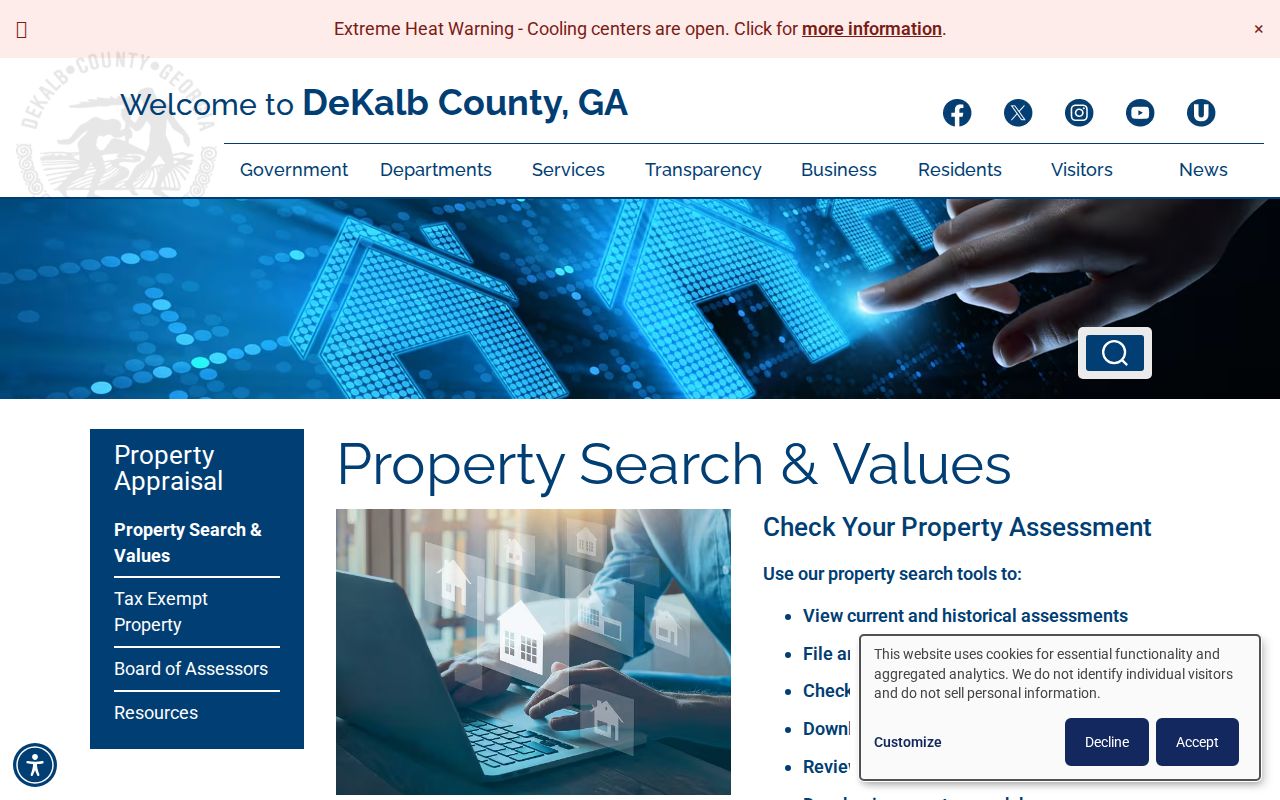
The captured gateway leads to the official owner, address, and parcel search used to anchor the backward trail.
Note: An exemption or matching tax address can support owner occupancy, but neither one proves the full household at a Decatur property.
Walk DeKalb Deeds Backward
The DeKalb County Clerk of Superior Court is the land-record custodian. Its Landmark Web index publishes recorded-document information from 1979 forward. Older real-estate books reach back to 1842, after an earlier courthouse fire. Landmark supports name, document, book/page, parcel ID, filing-date, clerk-file-number, and legal-description searches. The clerk warns users to try spelling variants.
A chain of title is the linked set of recorded transfers for one parcel. Follow it in reverse:
- Copy the current owner, parcel ID, and legal description from the appraisal card.
- Find that owner's purchase deed and note the grantor, recording date, book/page, and clerk file number.
- Search the seller as an earlier grantee. Open the deed by which that seller acquired the same land.
- Repeat the handoff, checking the parcel or legal description when names or street numbers change.
- At the 1979 boundary, take the last online names and book/page to the courthouse public-access room.
The official Landmark search screen displays the separate routes that make this work possible.
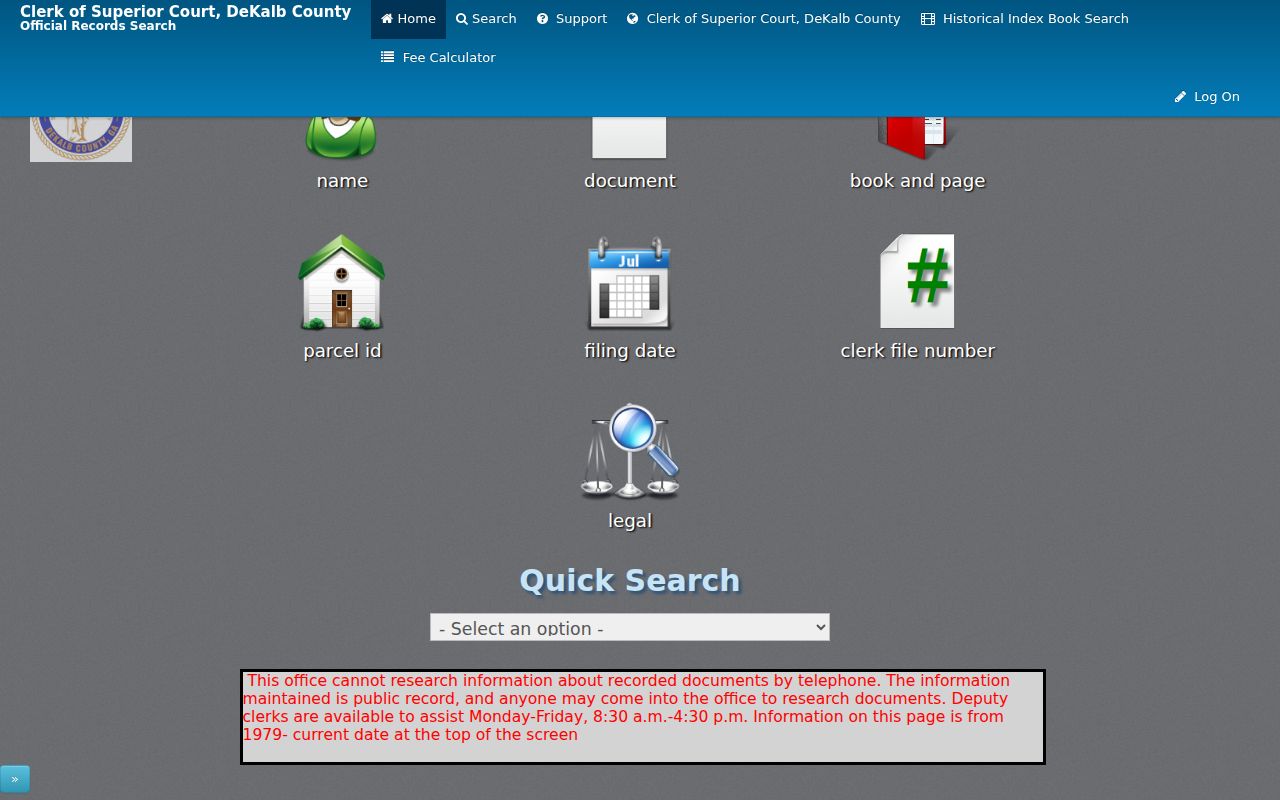
The search modes in the image show why a parcel ID or book/page often works better than an old street address.
- Grantor
- The person or entity transferring an interest in land.
- Grantee
- The person or entity receiving that recorded interest.
- Chain of title
- The sequence of recorded transfers for the same property.
- Legal description
- The land-lot, subdivision, lot, plat, or boundary wording that identifies land even when an address changes.
Decatur Deeds Before 1979
The web index is not the full deed collection. The Real Estate Division keeps public computers and records at 556 North McDonough Street, on the courthouse ground floor, from 8:30 a.m. to 5:00 p.m. weekdays. Deputy clerks assist during posted desk hours, but the office expressly says it will not research a recorded document by telephone. Call 404-687-3812 for access and copy procedure, not for a title search.
Bring the exact book/page, party names, approximate date, parcel ID, and legal description gathered online. Ask for the older grantor and grantee index or deed book. The Georgia Archives, its county microfilm cards, FamilySearch catalog material, and DeKalb History Center are further channels when the courthouse series is incomplete or travel is not possible.
The Georgia Archives site pictured here is a starting point for catalog and research-room planning.
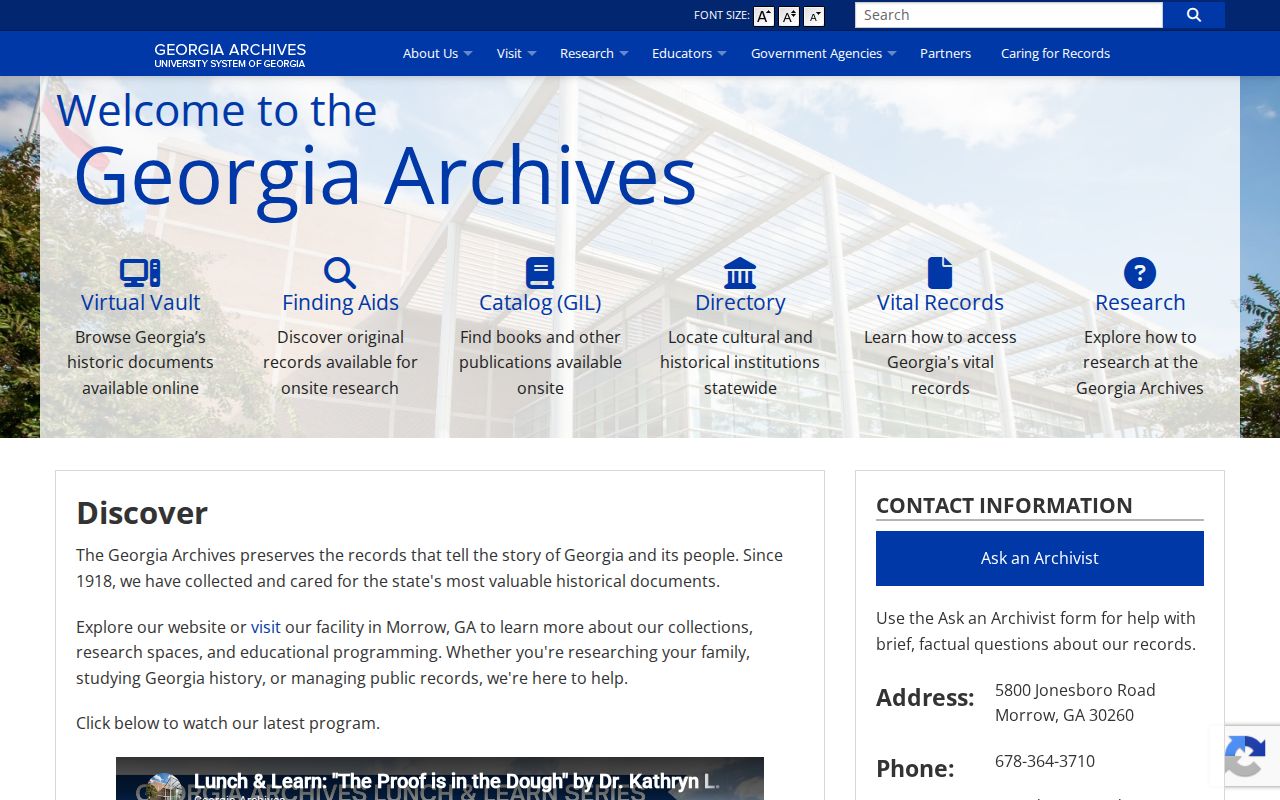
The state archive supplements, but does not replace, the clerk's land books and local finding aids.
Decatur Records After the Fire
DeKalb County says its real-estate records begin in 1842 because earlier records were lost in a courthouse fire. The DeKalb History Center notes that at least one official county volume survived. Other deed material later surfaced in private collections. This history means silence in an early index is not proof that a person or transaction never existed.
Move sideways when a Decatur previous-residents trail reaches that gap. Tax digests, plats, court minutes, family papers, newspapers, church records, and later recitals in deeds may preserve part of the lost chain. Georgia Archives disaster and microfilm cards help identify the affected record series. Describe only what the surviving source establishes, since a later summary is not a replacement for the missing deed.
Match Decatur Directories and Census
Deeds identify owners, not every occupant. Old city and reverse directories can name a householder at a street address, while federal census schedules can add a spouse, children, relatives, boarders, and occupations. The DeKalb History Center has a discontinuous Atlanta and suburban directory shelf, including a standalone 1928-29 Decatur and Avondale volume and a 1939 DeKalb snapshot. The full holdings and abbreviations belong with the Decatur city directory collections.
Use a short, repeatable flow for past residents:
- Find the same address in directory years just before and after a public census year.
- Note the householder's full name, spouse mark, occupation, and any move or death code.
- Locate the census enumeration district and street, then compare the whole household.
- Search the next directory year to catch a move, remarriage, spelling shift, or renumbered address.
A criss-cross directory is arranged by street and number rather than only by surname. An enumeration district is the small area assigned to one census taker. Neither source is complete. Some renters, boarders, and omitted households will remain invisible.
Note: Printed-directory runs are not continuous, so bracket a missing year with the nearest volumes and corroborate the result elsewhere.
Map Changes at Decatur Addresses
An old address can fail even when the building or lot still exists. Decatur plats may redivide or combine parcels, creating a new parcel ID. Oral histories also recall Webster Street becoming Clairemont and a former Marshall Street course near the stadium disappearing under later development. Those memories are useful leads, but dated plats, directory street guides, City Commission minutes, and maps must prove the change.
Sanborn fire-insurance maps can show a building footprint, construction material, use, outbuildings, and street numbering for the map year. City permits can date construction, repair, demolition, occupancy changes, roofing, utility work, historic-district review, or right-of-way work. Decatur now uses Community Core for permit submissions. For an older retained file, contact City Planning or make a narrow city open-records request that gives the address, likely date span, and record series.
Permits identify work and participants, not previous residents. Pair the permit date with deeds and directories before attributing the project to a household.
Close Decatur Household Trails
When an owner vanishes from the next deed or directory, probate and obituary sources may explain the handoff. Search the deceased owner in DeKalb Probate Court. A public estate petition, notice, inventory, or order may identify interested parties. Then compare those names with an administrator's deed, later grantor entries, cemetery records, and local obituaries.
Decatur Library provides genealogy databases, directories, and DeKalb News Era microfilm. DeKalb History Center holds Decatur Focus, Decatur Dispatch, family papers, school records, and community periodicals with gaps. These channels can trace a former classmate, heir, or longtime resident beyond the property record, but an indexed heir name alone does not establish legal entitlement.
DeKalb oral-history collections offer another source for named local memory when a paper trail needs community context.
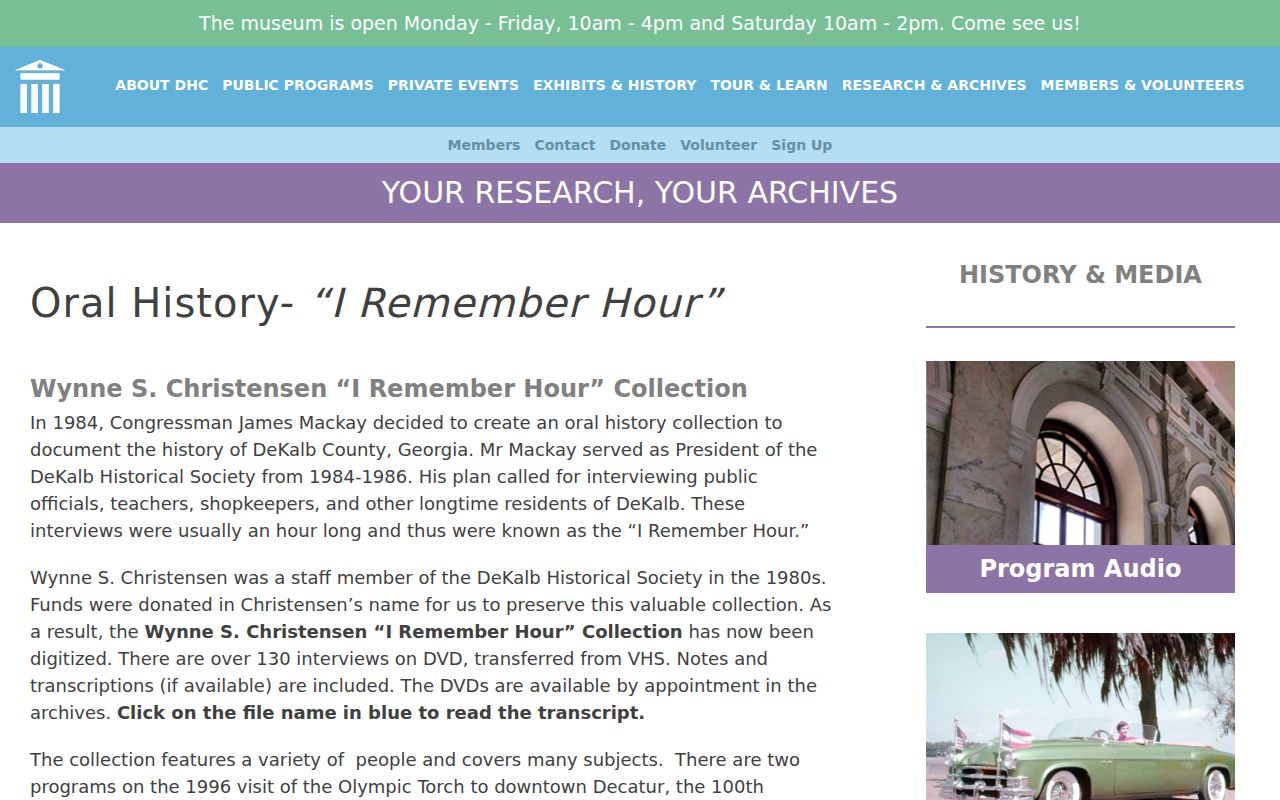
The archive image represents an appointment-based collection, not a complete roll of everyone who lived at an address.
Use Decatur Previous-Resident Records Carefully
A house-history search is strongest when every statement stays tied to its source. A parcel card supports assessed ownership. A deed supports a recorded transfer. A directory supports a listed householder in that edition. A census supports a household on its enumeration date. None proves who occupied every room throughout the year.
Correct errors with the custodian that holds the source. Property ownership questions go to DeKalb Property Appraisal, deed-index issues to the Superior Court clerk, and permit-record questions to the City of Decatur. Safe at Home and other confidentiality rules may lawfully hide an address. Do not try to work around a protected record.
Lawful use. Research Decatur previous residents for family history, estate work, or the story of a home. Never use an address trail to watch, threaten, harass, or harm a living person.